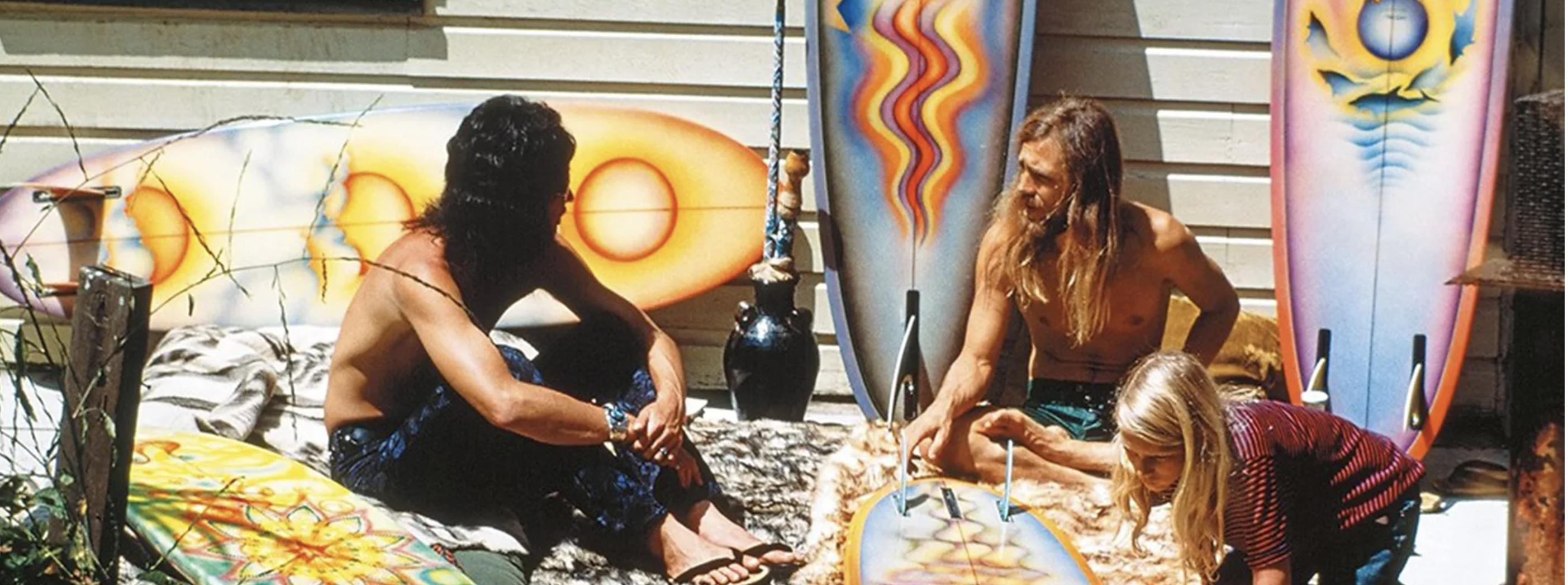
The Brotherhood of Eternal Love began as a small Anaheim crew that converted to a psychedelic mission after an early LSD experience, then reorganised in Modjeska Canyon as a tax-exempt “church.” They moved into Laguna Beach, clustered in “Dodge City,” and opened Mystic Arts World as a cultural hub, blending yoga, art, and a sacramental approach to psychedelics.
From 1968 onward they became synonymous with Orange Sunshine, a widely distributed form of LSD associated with chemists like Nicholas Sand and Tim Scully. Financing and scale came from Afghan hash and marijuana routes, with inventive concealment methods and a reputation for clean, cheap doses meant to democratise access.
Their circle intersected with prominent figures, notably Timothy Leary, whose presence amplified attention and risk. The group’s public face included the Laguna Canyon “Christmas Happening” and the head-shop gallery scene, while the covert side involved forged identities, rapid logistics, and international supply lines.
A turning point came with founder John Griggs’s death in 1969, which weakened the idealist center and accelerated a drift toward harder commerce. Coordinated raids on August 5, 1972 fractured the network, sending members underground or into exile, and closed the most visible chapter of the operation.
Significance, the Brotherhood shows how a sacramental vision can scale into a de facto drug syndicate, how branding like Orange Sunshine can define an era’s perception of purity and potency, and how California’s surf-hippie aesthetic merged with clandestine trade. Their rise and fall fed the escalation of the War on Drugs, influenced how authorities pursued psychedelics, and left a lasting cultural legend that sits between utopian experiment and underground industry.